

Online Therapy for Relationship Struggles and Attachment Wounds in Massachusetts & Maryland
Attachment Wounds & Relationship Patterns
You look completely fine on the outside. To the rest of the world, you’re the responsible one, the high-achiever, the one who has it all together. But inside? It’s absolute chaos.
If you are a BIPOC or First-Gen woman in Massachusetts navigating the exhausting maze of modern relationships while carrying the weight of generational expectations, you are in the right place. You don’t have to keep doing this alone.
The Invisible Weight You’re Carrying
Let’s be real for a second. From the outside, no one would guess how much noise is constantly running through your head. You crave deep, genuine connection so badly, but the moment it gets close, a wall goes up. You don't always trust it. You constantly find yourself caught in a painful tug-of-war, wondering: "Am I too much, or am I just not enough?"
Living with attachment wounds and relationship trauma feels like operating on high alert 24/7. It shows up in those quiet, frustrating moments that eat away at your peace:
The Overanalysis Loop: You spend hours dissecting a single text message, looking for hidden meanings, or replaying a conversation in your head until you’re completely exhausted.
The Emotional Disconnect: The second someone gets too vulnerable or tries to see the real you, you check out emotionally. It’s safer to pull away before they can reject you.
The Chase or Flight Cycle: You find yourself either chasing after people who are emotionally unavailable, or panicking and running away from the people who actually show up for you.
The Performance Trap: As a First-Gen or BIPOC woman, you might feel like you constantly have to prove your worth, over-function, or play the "strong woman" role, leaving no room for your own needs.
It is incredibly lonely to feel like closeness is confusing, overwhelming, or just entirely out of reach. You want to let your guard down, but your body remembers all the times it wasn’t safe to do so.
-
![Couple sitting nearly back to back, glancing at each other from the corners of their eyes — capturing the tension of wanting emotional closeness while simultaneously fearing intimacy and vulnerability.]()
Pulled between wanting intimacy and fearing it
-
![Woman standing with one hand on the wall, gazing into the distance — illustrating the emotional whiplash of feeling anxious when a partner doesn’t respond and emotionally numb when they finally do.]()
Anxious when they don’t respond, emotionally numb when they do
-
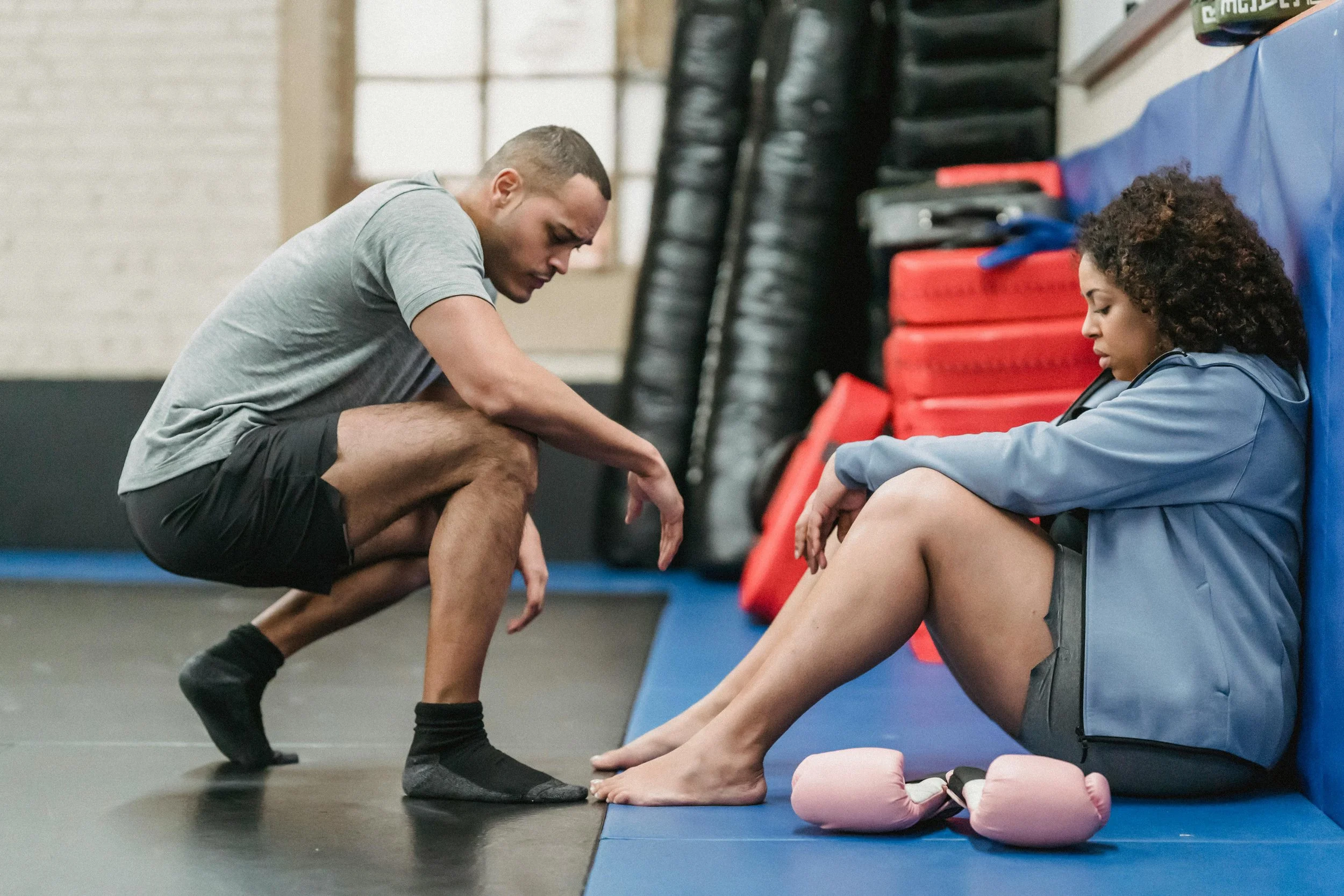
![Woman sitting on the gym floor looking down, with a man kneeling in front of her in a similar posture — reflecting the heavy emotional weight of being preoccupied with a partner’s perception, fear of doing something wrong, or the anxiety of potential]()
Preoccupied with what they think of you, what you did wrong, or whether you’re being abandoned
-
![Woman watering a plant with a distracted expression — symbolizing the internal confusion of rapidly shifting from emotional shutdown to obsessive thoughts within moments.]()
Confused by how quickly you shut down or obsess, sometimes within the same hour
-
![Woman sitting at a table with a pencil poised over a notebook, gazing off in thought — capturing the quiet self-protection of avoiding emotional closeness to guard against disappointment.]()
Avoiding closeness to protect yourself from disappointment
-
![Woman preparing to take a selfie with a man, both looking at each other with tentative expressions — reflecting the experience of walking on eggshells in relationships, fearful of sparking conflict or facing rejection.]()
Walking on eggshells in relationships, afraid of triggering conflict or rejection
-
![Family gathered around a kitchen island in a candid moment — symbolizing the complexity of relational dynamics where connection often felt tied to performance, approval, or conditions.]()
Caught in family or relational dynamics where love always felt conditional
-
![Couple sitting on the floor in front of a couch, sharing a box of pizza — reflecting the struggle of navigating relationships where the default is either overgiving or emotionally pulling away.]()
Feeling like you don’t know how to be in relationships without overgiving or disappearing





Imagine This: What Life and Relationships Can Look Like
Take a deep breath. Close your eyes for just a second and imagine what it would feel like to step out of the chaos and into a life where relationships actually feel like a safe harbor, not a battlefield. Therapy isn't about erasing your past; it's about changing how the past holds you hostage in the present. Here is what is entirely possible for you with the right support:
Deep, Grounded Trust
Imagine waking up and not checking your phone with a knot of anxiety in your stomach. Imagine trusting that someone loves you simply because they said they do—no hidden agendas, no waiting for the other shoe to drop.
Clear Boundaries Without the Guilt
Picture yourself saying "no" to things that drain you, or expressing your true needs to a partner, friend, or family member. Imagine doing it with a calm heart, completely free of the toxic guilt that used to keep you small and accommodating.
Emotional Safety and Resilience
When disagreements happen (because they do!), you won’t feel like your whole world is crashing down. You’ll have the internal safety to stay present, speak your truth, and navigate conflict without disconnecting or spiraling into panic.
Coming Home to Yourself
The biggest shift? You will stop looking outside of yourself for validation. You will look in the mirror and know, with absolute certainty, that you are worthy of love, respect, and soft, easy spaces—just as you are.

How I Specially Help
I don’t sit across from you (or rather, across the screen) like a blank, rigid textbook. My style is warm, collaborative, deeply compassionate, and rooted in reality. I support emotionally attuned, self-aware women who are simply stuck in relational patterns that no longer serve them.
Here is the truth: I am not here to fix you. I will never ask you to fix yourself, because my approach is grounded in the firm belief that you were never broken to begin with.
Instead, my work centers on a decolonized, justice-centered, and trauma-informed lens. When you've experienced systemic trauma, marginalization, or chronic invalidation, your relationship struggles aren't just personal—they are systemic. We cannot heal your heart without honoring your identity as a BIPOC or First-Gen woman navigating a world shaped by harm, power, and performance.
What We Will Do Together
In our virtual therapy sessions, we will dive deep into the roots of your patterns while giving you practical, real-life tools for today. We will work together to:
Trace the Origin Stories: We’ll gently uncover where your attachment patterns and survival strategies came from so you can stop blaming yourself for them.
Heal the Disconnected Parts: We will extend compassion and healing to the parts of you that learned to chase, appease, disappear, or shut down.
Build True Internal Safety: We’ll work with your mind and body to build a nervous system that feels safe enough to experience genuine intimacy and vulnerability.
Deconstruct Systemic Pressure: We’ll untangle the cultural and societal expectations that tell you that you have to be perfect or perform to be worthy of love.
This is relational trauma therapy that honors your whole self. Together, we’ll build new experiences of trust, intimacy, and emotional connection—starting with the most important relationship you have: the one with yourself.
Therapy for Relationships & Attachment Anxiety
Here’s what you should know
-
Absolutely. In fact, many women find that being in the comfort of their own safe space—surrounded by their own comforts, blankets, or pets—allows them to dive deeper into trauma and attachment work than they would in a traditional office. As long as you are anywhere in Massachusetts, we can connect.
-
Yes. Your nervous system is adaptable. Through relational repair, body-based therapy, and self-trust, we can create new experiences that support secure, grounded connection.
-
Absolutely. Many people have mixed attachment styles, especially if their early relationships were inconsistent. In therapy, we’ll explore both sides of your experience without judgment.
-
That’s okay. We start with where you are. Therapy offers a secure, reparative space where you can begin practicing new patterns, even if you’ve never experienced them before.
-
Yes. We center those dynamics here. Your relationships don’t exist in isolation. The impact of racism, intergenerational trauma, and cultural expectations are part of the work.
-
Yes. These methods help access and process emotional memories stored in the body, even ones you can’t put into words. They’re powerful tools for healing attachment wounds at the root.
-
Because we are working on deep-seated attachment patterns and relational trauma, this isn't a quick-fix, two-session solution. Healing is a journey. Some clients find significant relief and shift their patterns within a few months, while others choose to stay longer for ongoing depth work and accountability. We will co-create a pace that feels sustainable for you.
Let’s Explore Working Together: Take Your Next Step
The chaos inside doesn't have to be your permanent normal. You’ve spent long enough protecting everyone else and holding everything together. It is your turn to be supported.
Let's unpack the patterns, heal the old wounds, and build the beautiful, safe relationships you truly deserve.
3 Easy Ways to Connect Today:
Schedule a Free Consultation through my booking form : Click the button below to book a complimentary, no-pressure 15-minute phone consultation where we can see if we're a perfect match. BOOK MY FREE CALL
Send a Direct Message: Not ready to jump on a call just yet? No worries. Fill out my secure online contact form with your story, and I’ll personally get back to you within 48 hours. Book your free 15-minute consultation today
Stay in Touch: If you’re still exploring, that’s okay too. Healing happens on your own timeline. Take your time, look around, and reach out whenever your heart says it's time.
Please note: I provide HIPAA-compliant, secure online therapy to women, BIPOC, and First-Gen individuals located entirely within the state of Massachusetts.